
Yuta Itsumi, Ena Higotani, Tamami Dozono, Satoshi Watanabe
Received 23 July, 2025
Accepted 21 October, 2025
Published online 11 February, 2026
Yuta Itsumi1), Ena Higotani1), Tamami Dozono2), Satoshi Watanabe1)
1) Faculty of Social and Cultural Studies, Kyushu University, Japan
2) School of Letters, Kyushu University, Japan
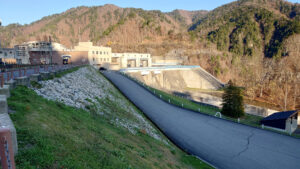
This study examined the usability of agricultural reservoirs as water resources and the sustainability of their maintenance and management across Japan, with a focus on the characteristics of municipalities. Using a nationwide database of agricultural reservoirs, we developed metrics to quantitatively assess the water availability and maintenance difficulty of agricultural reservoirs in each municipality, based on precipitation and population data. These metrics were applied in regional analyses, revealing spatial patterns that reflect both demographic and climatic conditions. Future values of the metrics were also estimated using climate model-based precipitation projections and population forecasts derived from the cohort component method. The results emphasized that the potential and challenges for utilizing and managing agricultural reservoirs vary among municipalities. The analysis further identified scattered municipalities across Japan – including not only western Japan, which has traditionally been recognized as having a large number of agricultural reservoirs, but also other regions – where increased attention to reservoir management and utilization will be required in the future.
Copyright (c) 2026 The Author(s) CC-BY 4.0