
Kento Tanaka, Michihide Ishihara, Tomohito J. Yamada
Received 12 May, 2025
Accepted 17 August, 2025
Published online 25 March, 2026
Kento Tanaka1), Michihide Ishihara2), Tomohito J. Yamada2)
1) Graduate School of Engineering, Hokkaido University, Japan
2) Faculty of Engineering Hokkaido University, Japan
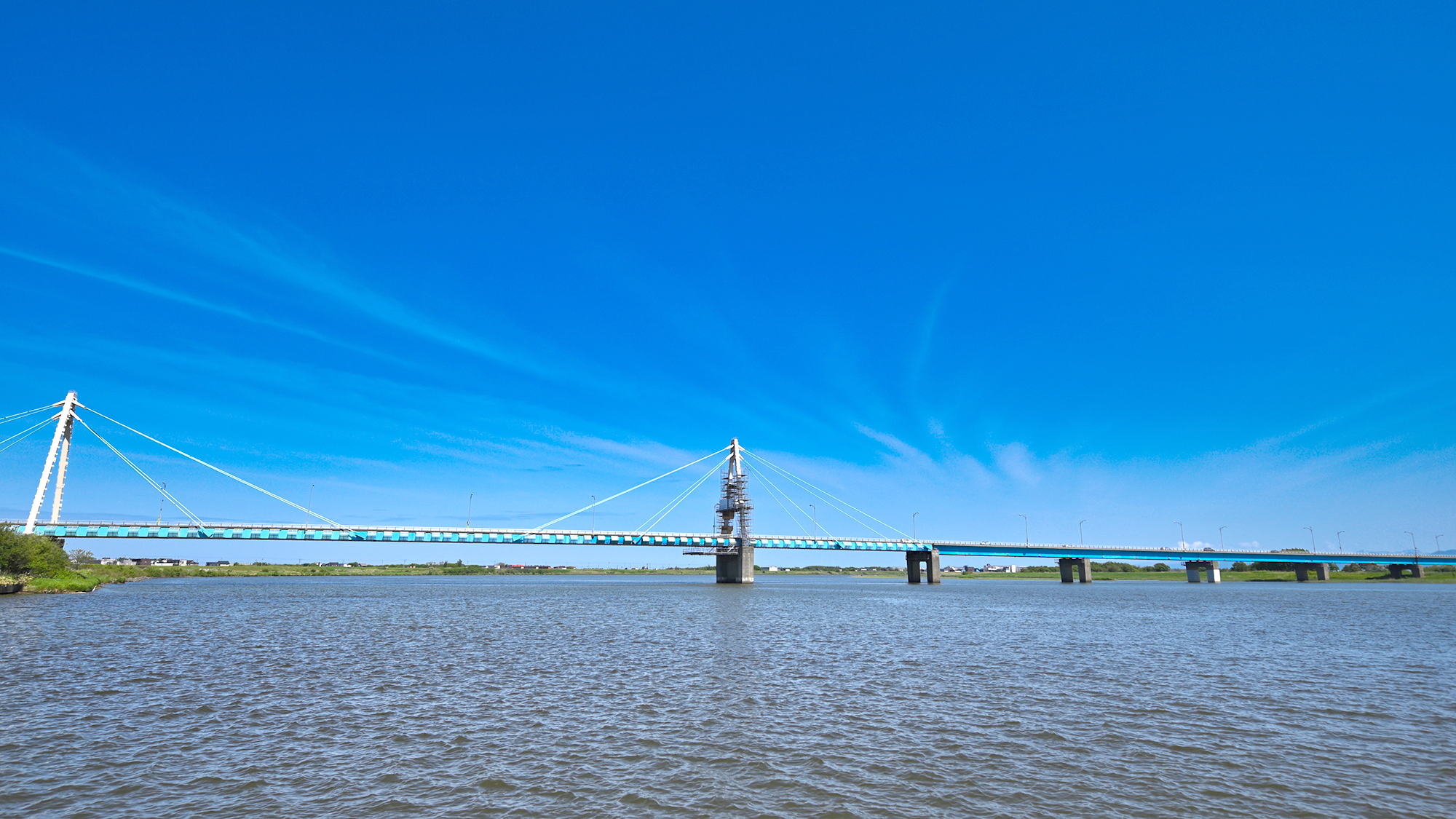
Saltwater intrusion in the Ishikari River occurs as a saltwater and freshwater two-layer flow, extending up to 30 Kilopost (KP) upstream, and poses a risk to various water intakes located near the estuary. This study investigates the hydrological and climatological factors influencing saltwater intrusion and its projected changes under future climate conditions. By analyzing observational data precipitation, river discharge, wind speed/direction, tidal levels and climate projections, along with numerical simulations using a two-layer flow model, we examined the frequency and extent of intrusion. Results indicate that under future climate scenarios, the likelihood of light rainfall combined with southeasterly wind conditions favorable for saltwater intrusion will increase. Currently, saltwater intrusion is most prevalent in July; however, in the future, it is expected to occur earlier in June due to reduced snowmelt. Furthermore, decreased river discharge and sea level rise will likely increase saltwater intrusion distances. These findings highlight the importance of considering climate change impacts in water resource management for estuarine regions like the Ishikari River.
Copyright (c) 2026 The Author(s) CC-BY 4.0