
Genki Saito, Yoshihiro Asaoka, Takeshi Yamazaki, Javier Mendoza, Walter W. Immerzeel
Received 9 October, 2025
Accepted 26 December, 2025
Published online 25 March, 2026
Genki Saito1), Yoshihiro Asaoka2)3), Takeshi Yamazaki4), Javier Mendoza5), Walter W. Immerzeel3)
1) Graduate School of Engineering, Nihon University, Japan
2) College of Engineering, Nihon University, Japan
3) Faculty of Geosciences, Utrecht University, Netherlands
4) Graduate School of Science, Tohoku University, Japan
5) Instituto de Hidráulica e Hidrología, Universidad Mayor de San Andrés, Bolivia
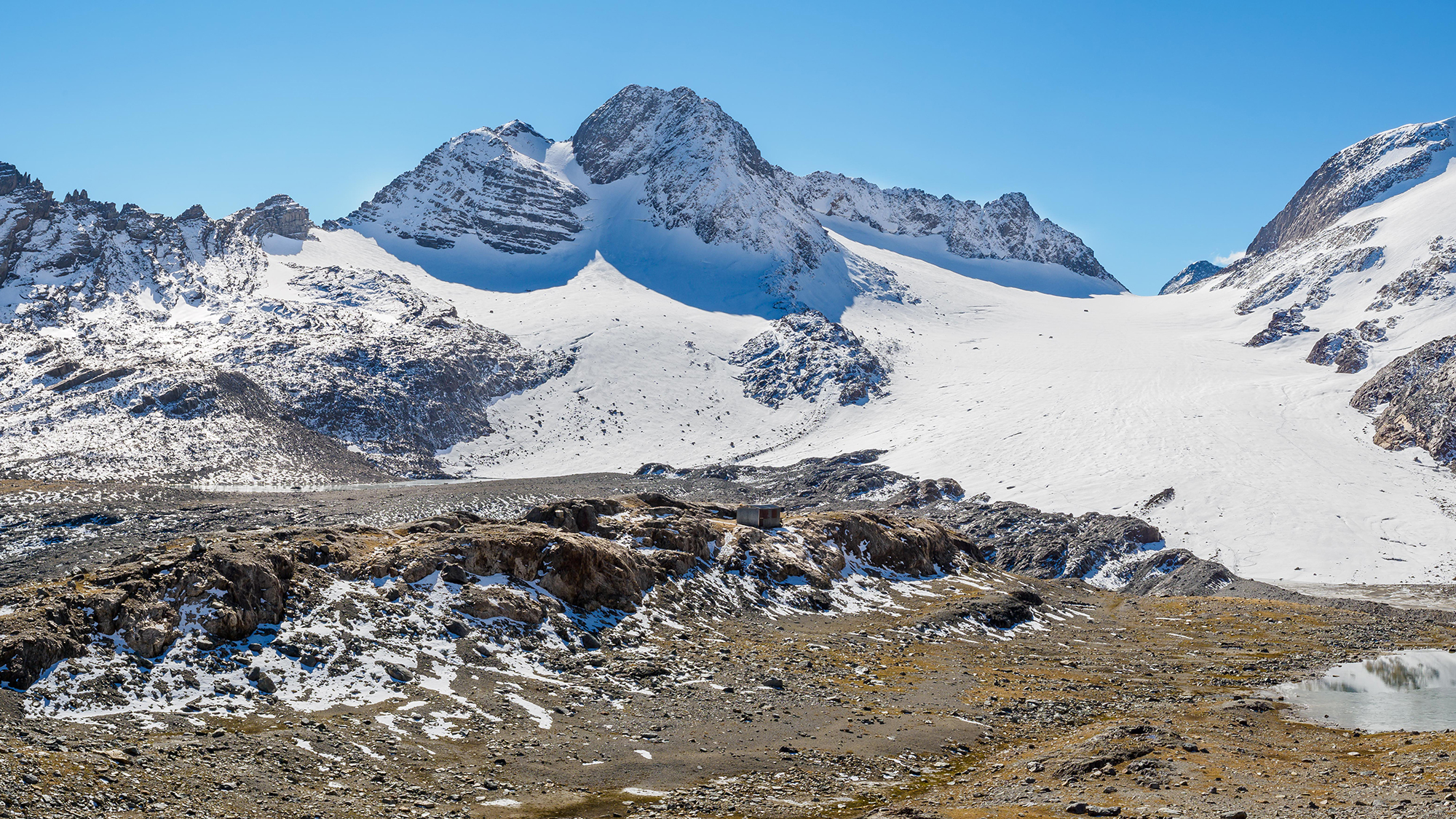
The 2014–2016 El Niño event was unusual in that it stalled after its initial development before re-intensifying into a prominent Super El Niño. This study analyzed the surface energy balance at the Huayna‑Potosí Glacier, Bolivia, during this period and compared it with an ENSO-neutral period (2012–2013). Observations and model results indicated reduced precipitation throughout the El Niño period and a tendency toward negative mass balance at the monitoring site, particularly pronounced during the mature phase. In the neutral period, melt energy peaked during the transition to the core wet season, but it was suppressed in both the development and mature phases because albedo remained high despite reduced precipitation. In contrast, melt energy increased substantially during the wet season of the mature phase, driven by albedo reduction and enhanced air temperature. These findings demonstrate that tropical glacier response to the 2014–2016 El Niño event is strongly phase- and season-dependent. As in the neutral period, most melt energy was derived from net radiation, but during El Niño its variability was primarily controlled by albedo. This provides valuable insight for empirical melt models of tropical glaciers under extreme El Niño conditions.
Copyright (c) 2026 The Author(s) CC-BY 4.0